What Is the Best Age to Begin Martial Arts?
A Parent’s Guide to Martial Arts for Kids
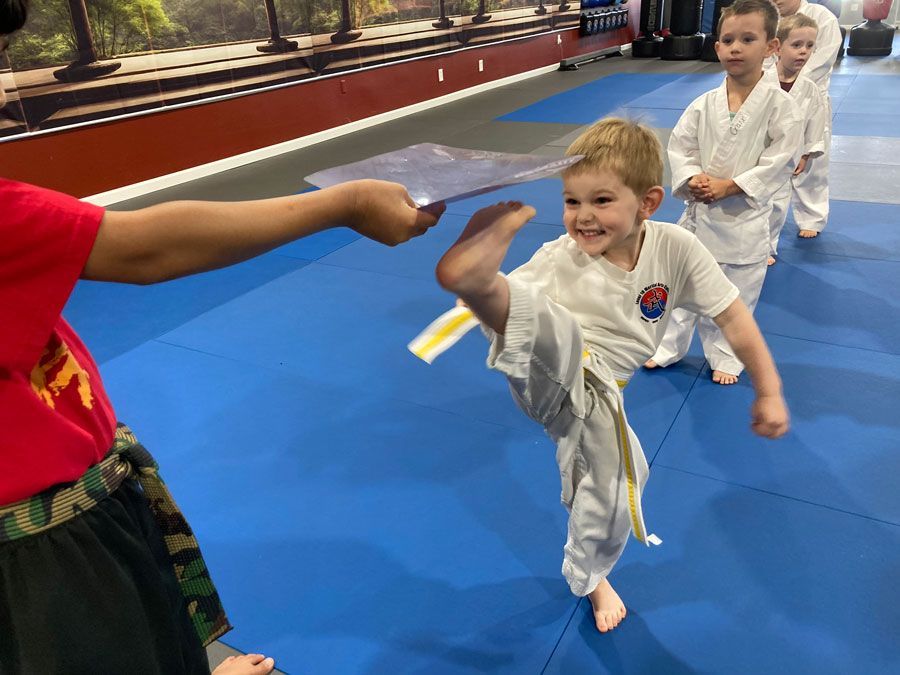
Children can begin structured martial arts classes as early as age 3 with toddler-appropriate programs, while most schools recommend ages 4 or 5 for more technical skill development. At Level 10 Martial Arts College, our Little Ninjas program accepts students starting at age 3, with every new student completing an evaluation lesson so readiness, not age alone, determines the right start.
TL;DR:
- Martial arts classes can begin as early as age 3 with preschool-focused programs, but readiness signs matter more than a specific age
- Our Little Ninjas program serves ages 3 to 7, with Kids Martial Arts for ages 8 to 12 and Teen/Adult classes for ages 13 and up
- A $47 2-week trial includes classes, a free uniform, and personal lessons so you can test your child’s readiness with zero risk
- Martial arts significantly benefit children with ADHD through structured routines, immediate feedback, and physical outlets that improve focus
- All training for toddlers and young children is non-contact, supervised by certified instructors, and backed by $2 million in liability insurance
At What Age Can Children Start Martial Arts?
Structured martial arts programs can begin as early as age 3 with toddler-appropriate classes that emphasize basic motor skills, listening, and social routines. Most martial arts schools recommend starting around age 4 or 5 for programs that introduce more technical movements, while some reserve formal karate training until age 6 when children have better coordination and longer attention spans.
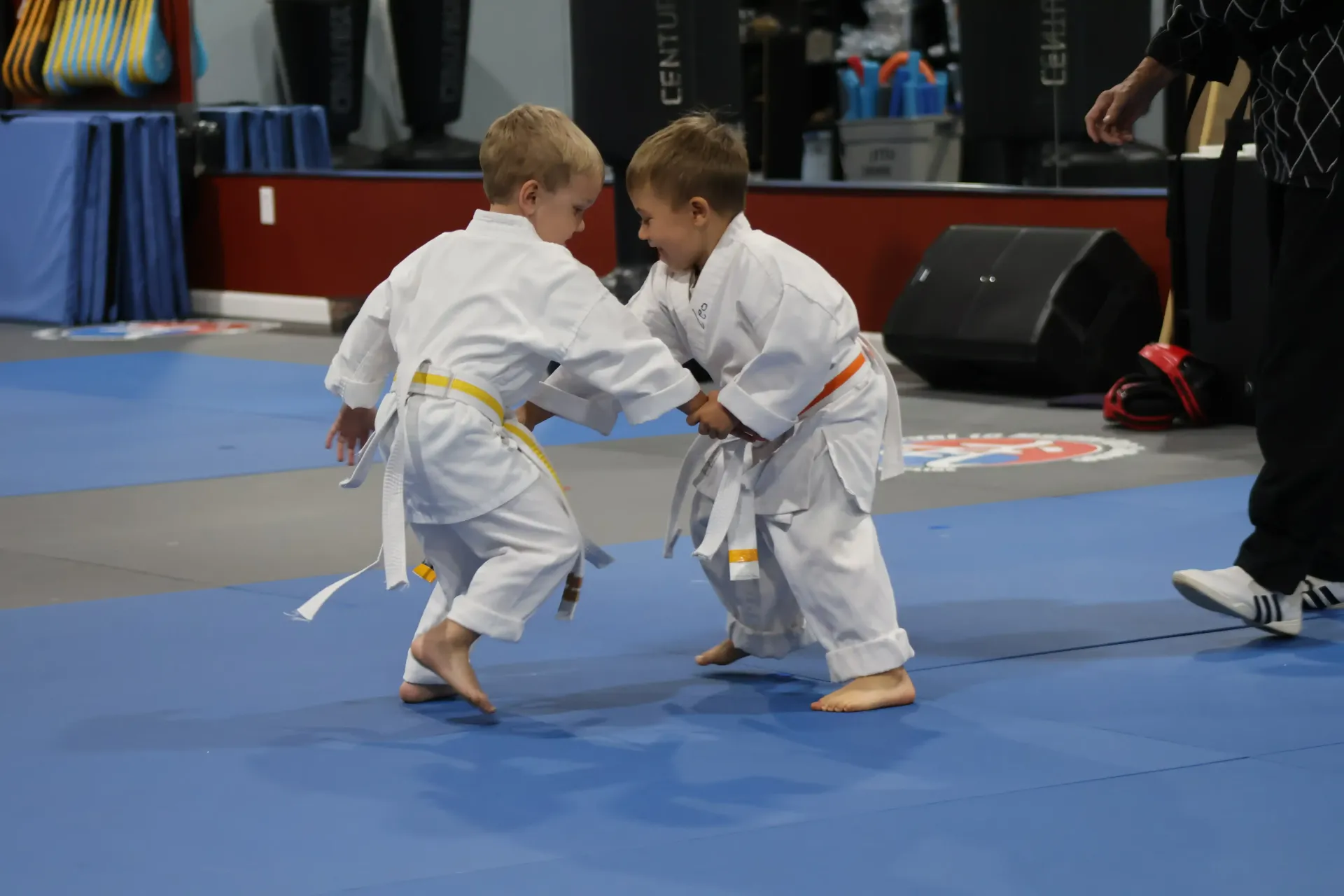
The distinction matters. Preschool martial arts focus on fun, movement, and foundational life skills like taking turns and following directions. Programs for older children layer in discipline, goal-setting through the belt system, and gradually more complex techniques. At Level 10 Martial Arts College, our Little Ninjas program accepts children ages 3 to 7 and meets them exactly where they are developmentally. Parents stay present and involved during every class, so the learning extends beyond the mat.
Pediatric and sports medicine perspectives suggest that basic stances and balance exercises are safe around age 3, while more technical karate training becomes appropriate around age 6 when children have developed the necessary motor control and ability to focus. This aligns with what we have observed across 31 years of teaching: some 3-year-olds thrive immediately, while other children do better waiting until 5 or 6. Age gives you a starting point, but readiness tells you the real story.
What Are the Signs My Child Is Ready for Martial Arts Training?
The most reliable readiness signs are the ability to follow two-step instructions, separate from a parent without distress, show interest in physical activity, and sustain attention for 5 to 10 minutes at a time. Age alone is never the final decider, which is why every new student at our school completes an evaluation lesson that tests these skills in a real class environment.
Watch for these indicators in your child:
- They can listen to a simple instruction like “stand on the line” and follow through without repeated prompting
- They stay with a group activity for several minutes without wandering off or needing redirection
- They handle a brief separation from you without crying or shutting down
- They show curiosity about martial arts or other physical activities when they see them
- They can manage basic self-regulation, like not hitting or grabbing when frustrated
Our Little Ninjas program is built around these developmental realities. Classes are twice per week, and parents stay actively involved rather than dropping off and leaving. If a child is not quite ready after the evaluation, we are honest about it. We refund the trial fee and recommend trying again in 6 to 12 months. That honesty is part of what families trust about our approach: we want every child to succeed, and that sometimes means waiting until the timing is right.
How Do Martial Arts Benefits Vary by Age Group?
Every age group gets something different from martial arts training because the developmental focus shifts as children grow. A preschooler is learning to stand still and take turns. A 10-year-old is setting goals and discovering what perseverance feels like. The same mat, the same instructors, but a completely different set of life lessons depending on where the student is in their own journey.
Preschoolers ages 3 to 5 work on listening, basic motor skills, and social routines. Classes emphasize fun, movement, and simple drills that build coordination while introducing the idea of respect and following directions. The goal is not technical mastery. It is comfort with structure, group participation, and the confidence that comes from trying something new.
Young kids ages 6 to 9 build discipline, coordination, and goal-setting through the belt system. This is the stage where students start to understand that effort produces results. They test every 8 weeks, earn rank promotions, and learn that showing up consistently matters more than being naturally talented. The character lessons (patience, perseverance, humility) start to sink in.
Pre-teens and teens ages 10 and up develop confidence, self-defense skills, and leadership. Training becomes more physically demanding and technically precise. Students who stick with it through these years often become role models for younger kids, and some go on to join our Leadership Development Program to build public speaking and communication skills. Our martial arts classes for all ages are designed to meet students at each of these stages without pushing them past what they are ready to handle.
How Safe Is Martial Arts for Toddlers and Young Children?
Martial arts training for toddlers and young children is safe because programs designed for these age groups use controlled, non-contact exercises with no sparring and no high-impact techniques. Qualified instructors supervise every movement, and the activities are matched to what young bodies can actually do. Pediatric sports medicine perspectives support starting with age-appropriate balance and coordination work as early as age 3.
At Level 10 Martial Arts College, safety is built into the structure of the program. Our Little Ninjas classes do not include sparring. Students focus on basic stances, simple kicks, blocks, and drills that improve coordination without risk of injury. Parents are present and actively involved during every class, so there is an extra layer of supervision and comfort. The school carries $2 million in liability insurance, and all instructors are trained and certified through Master and Mrs. Theros, with additional certifications through the MATA and PROMAC programs.
Instructor qualifications matter just as much as the curriculum. Our experienced and certified instructors have a minimum of 2 years of teaching experience, and many have been with the school for much longer. They know how to read a room full of 4-year-olds, when to push and when to pull back, and how to correct technique without discouraging a young student. Safety is not just about preventing injuries. It is about creating an environment where a child feels secure enough to try something hard.
Can Martial Arts Help Children with ADHD Improve Focus?
Yes, martial arts can significantly benefit children with ADHD by providing structured routines, immediate feedback, and physical outlets that improve impulse control and concentration. The combination of repetitive technique practice, clear expectations, and a supportive group environment helps children develop focus that transfers to the classroom and home. Research and real-world experience both support martial arts as an effective, non-pharmaceutical intervention for attention and self-regulation challenges.
The structure of a martial arts class is itself therapeutic for a child who struggles with focus. Every class follows a predictable routine: bow in, warm up, practice techniques, receive corrections, try again, earn praise for effort. Instructions are short and concrete. Feedback is immediate. Physical movement gives restless energy a productive outlet. Over time, the repeated experience of focusing for short bursts and succeeding builds a kind of mental muscle that shows up in other areas of life.
One of the most powerful examples from our own school comes from the Clesi family. Brice Clesi’s doctor wanted him placed on medication for attention deficit when he was in 3rd grade. His family chose Level 10 Martial Arts College as an alternative. Four years later, Brice has never been on medication. He is a straight-A student and manages to play football and baseball while continuing his martial arts training. His mother, Julie, says he is very focused on his goals of attending the Naval Academy and entering the Marines.
Stories like Brice’s are not anomalies. We have seen this pattern repeat across 31 years of teaching. Martial arts works for kids with ADHD not because it is magical, but because it gives them exactly what their brains need: structure, movement, immediate consequences, and a community that believes they can succeed. Our confidence and focus programs for kids are built on these principles.
How Our 2-Week Trial Program Helps You Decide the Right Age for Your Child
The most practical way to determine if your child is ready for martial arts is to let them try it in a real class with qualified instructors who can give you honest feedback. Our 2-week trial program removes the guesswork. For $47, your child gets two weeks of classes, a free uniform, and personal lessons. We observe them in a real training environment and tell you plainly whether they are ready now or would benefit from waiting 6 to 12 months.
Here is how the process works. You contact us with some basic information about your child: age, any prior experience, what you hope they will gain. We schedule a private or semi-private evaluation lesson to assess readiness and determine the best program fit. If your child is ready, they attend group classes during the trial period while we continue to observe and provide feedback. If they are not ready yet, we refund your $47, explain what we saw, and recommend trying again when the timing is better. There is no pressure and no guesswork.
This approach matters because no article, checklist, or well-meaning friend can tell you what a real class experience will reveal. Some 3-year-olds surprise everyone with their focus. Some 5-year-olds need a little more time. The trial gives you concrete information instead of speculation. Limited spots are available, and our 2-week trial for $47 is the simplest way to get a real answer about your child’s readiness.
Frequently asked questions
What is the safest martial art for kids?
Programs designed specifically for young children, like our Little Ninjas classes, emphasize controlled, non-contact training without sparring or high-impact techniques. Safety depends more on the school’s approach and instructor qualifications than on the specific style. Look for certified instructors, age-appropriate curricula, and a school that limits physical contact for younger students.
How do I choose between karate and taekwondo for my child?
Both karate and taekwondo offer excellent foundations for children, with karate typically emphasizing hand strikes and strong stances while taekwondo focuses more on kicks and dynamic footwork. The quality of the instructors and the school’s approach to character development matter far more than the style label. Visit a few schools, watch a class, and choose the environment where your child seems most engaged and comfortable.
Can martial arts stunt my child’s growth?
There is no evidence that properly supervised martial arts training stunts growth in children. This myth likely comes from misconceptions about high-impact training, which is not part of programs designed for young kids. Age-appropriate martial arts classes actually support healthy physical development by improving coordination, balance, bone density, and overall fitness.
What if my child wants to quit after a few classes?
It is common for children to feel hesitant after the initial excitement wears off, and quitting immediately is usually a mistake. Give it at least the full 2-week trial period and talk with the instructors about what you are seeing. Many children need time to build comfort and confidence, and those who push through the early discomfort often become the most committed students.
How long does it take to get a black belt in martial arts?
In a consistent training program like ours, a student can expect to reach first-degree black belt in approximately 4 years with steady attendance. Sporadic attendance is the primary cause of delays. A black belt is less about talent and more about showing up, taking corrections, and refusing to quit when things get hard, a lesson that serves children well beyond the martial arts school.